

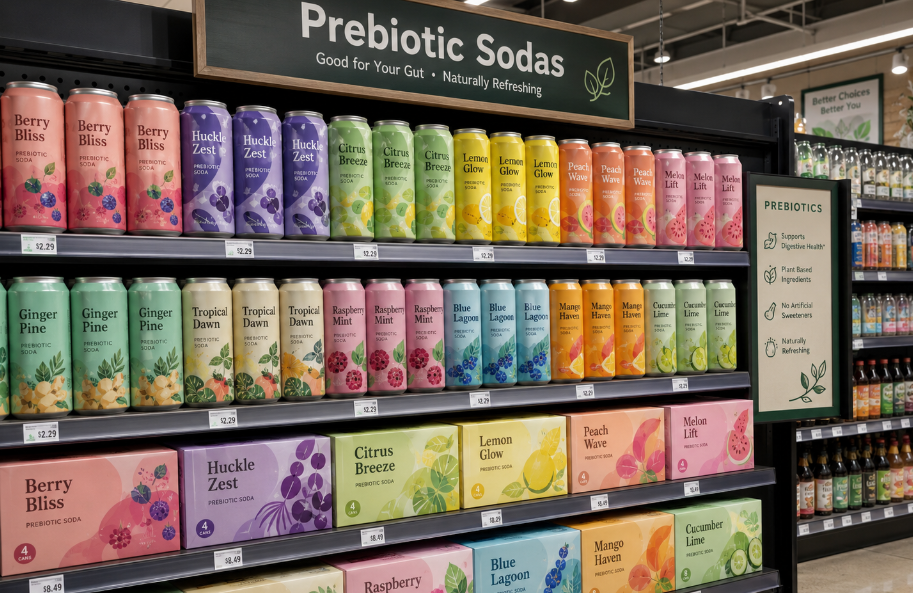
A new study found that prebiotic sodas may contain more sugar and less fiber than their manufacturers claim. The findings were presented at NUTRITION 2026, held July 25 through 28 in Washington, D.C. The study has not yet been published in a peer-reviewed journal.
According to Healthline, researchers used the Mintel Global New Products Database to collect data on 108 prebiotic sodas launched in the United States between 2021 and 2025. They compared those products to regular sodas, diet sodas, fruit drinks, and flavored sparkling waters released during the same period.
On average, a 12-ounce can of prebiotic soda contained 35 calories, 5 grams of sugar, and 5 grams of fiber. That puts them above diet sodas and flavored sparkling waters in both calories and sugar.
Lead study author Carlos R. Soto Díaz, a master of public health candidate pursuing a PhD at the University of North Carolina at Chapel Hill, explained the appeal of these drinks. "Because frequent intake of sugary drinks is associated with obesity, type 2 diabetes, and other chronic diseases, prebiotic sodas may appeal to consumers as an alternative," he said. "They are commonly marketed as lower-sugar beverages that offer familiar soda and juice flavors while also providing fiber. These products have grown rapidly and are becoming more visible in popular culture. At the same time, lawsuits involving major brands have raised questions about whether some marketing claims accurately reflect their nutritional content."
The study found that prebiotic sodas can reduce calorie and sugar intake when they replace regular soda or fruit drinks. But the opposite may be true for people who switch from diet soda or flavored sparkling water.
"These findings show that prebiotic sodas… are not necessarily calorie- or sugar-free and generally contain more calories and sugar than diet sodas and flavored sparkling waters," Soto Díaz said. "This is important because they may help reduce calorie and sugar intake when they replace regular soda or fruit drinks, but they may increase intake when they replace diet soda or flavored sparkling water."
The fiber content varied considerably across products. Researchers found a range of roughly 2 to 9 grams per can. That gap matters because prebiotic fiber is the main health claim these drinks make. Prebiotics are a type of fiber found in vegetables, fruits, and other plant-based foods. They act as food for beneficial bacteria in the gut.
Soto Díaz said consumers should not rely on marketing language alone. "The wide range shows that not all prebiotic sodas provide the same amount of fiber," he said. "Some may contribute a meaningful amount toward daily fiber intake, while others contain relatively little, so consumers should check the amount listed on the nutrition facts label rather than relying only on the word 'prebiotic' or other marketing claims."
The research was presented before peer review, which means the findings have not yet been independently verified through the full scientific publication process. The study adds to ongoing scrutiny of a beverage category that has grown quickly in stores and in online marketing over the past several years.