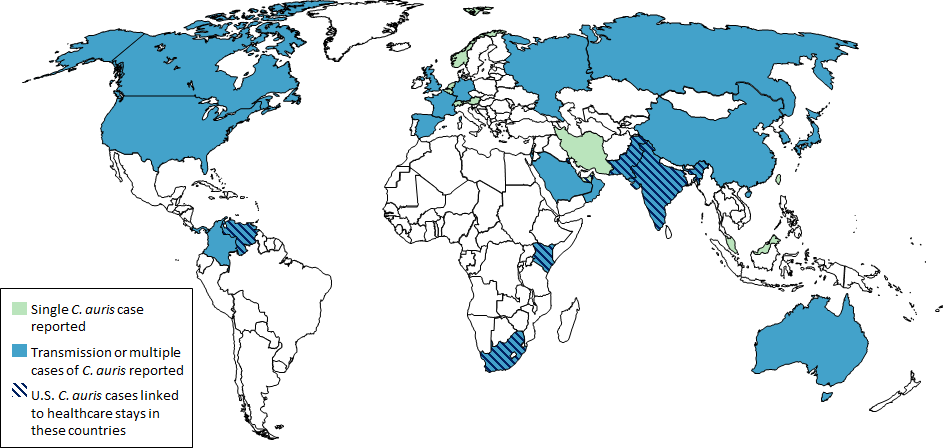
More than 3,000 cases of Candida auris have been reported across 23 states, according to data from the Centers for Disease Control and Prevention. The drug-resistant fungus has become a growing threat inside hospitals and nursing homes, where it can spread through catheters, breathing tubes, and IV lines. Texas has the most cases with 706 as of July 18. Michigan is second with 503 cases, and Illinois is third with 366 cases.
Healthline reported on the CDC findings, which show that 88% of clinical cases were among people ages 45 and older. The majority of cases occurred in males, and most were found in acute care facilities.
The CDC first raised alarms about Candida auris in 2023, citing a sharp rise in cases between 2019 and 2021. Agency officials said they were particularly concerned about strains that had become resistant to first-line treatments. Experts now say some strains resist all types of medications normally used to treat fungal infections.
Susan Huang, a professor of infectious diseases at the University of California Irvine School of Medicine, said the country saw a doubling of positive screening cultures for the pathogen in recent years. "The rapid emergence around the world and the speed of spread in the U.S. is alarming," Huang told Healthline. "The public should definitely be aware of this concern and how it may impact them or those they care about."
Researchers have estimated that 30 to 60 percent of people with Candida auris illnesses have died, though many of those individuals had other serious conditions that also raised their risk of death. Experts say most healthy people can recover from the infection on their own. The danger is concentrated among patients already dealing with serious health problems.
Candida auris can survive on surfaces for long periods before spreading to patients in medical settings. Huang said medical professionals should wear gowns and gloves when treating anyone with the infection, even when the patient is not critically ill. She also said patients should be placed in private rooms to prevent contact with others.
"[Candida auris] is known to rapidly spread in both hospitals and nursing homes, which is why many public health departments are working with these facilities to report cases and perform screening," Huang said.
William Schaffner, an infectious disease expert at Vanderbilt University in Nashville, Tennessee, noted that the spread remains tied to specific medical settings. "[Candida auris] is a growing problem among chronically ill persons in nursing homes and hospitals," Schaffner said.