Sitting up straight may do more than help your back. New research from McGill University suggests that an upright posture can subtly improve a person's mood and lead to better decision-making, at least under controlled laboratory conditions.
The study, reported by Science Daily, recruited nearly 200 people from the McGill community. Researchers designed the experiment so that participants did not know their posture was being manipulated. This was a deliberate choice. If people knew the study was about posture, they might have adjusted their behavior based on expectations rather than the posture itself.
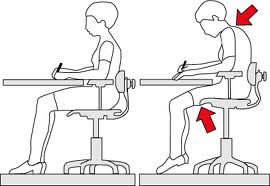
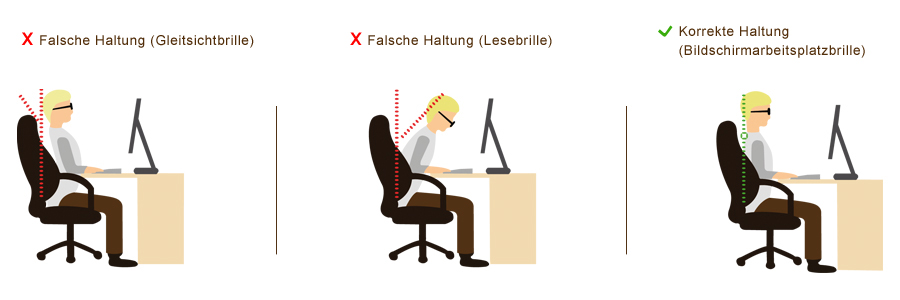
To get around that problem, the research team told participants they were evaluating a mobile application. A tablet was used for one part of the study. In one group, the tablet was placed on a stand with an adjustable table, which encouraged participants to sit upright. In the other group, the tablet lay flat on a desk set at a lower height, nudging participants to lean forward and hunch over.
After adjusting their posture in this way, participants played a virtual balloon game. Players could earn larger rewards by continuing to inflate a balloon, but they risked losing everything from that round if the balloon burst. It was a straightforward test of risk tolerance and judgment.
People in the upright group took greater risks overall and earned larger rewards. Researchers looked closely at whether these participants were simply being reckless. They concluded the opposite. "This suggests they were not acting more impulsively but rather were engaging in more effective risk-taking," explained Jorge Armony, a professor in the Departments of Psychiatry and Psychology at McGill and the study's senior author.
Participants in the upright group also reported significantly stronger feelings of pride on a follow-up questionnaire. Pride is an emotion associated with a more positive overall mood, and the researchers took the self-reported results as further evidence that posture had a measurable emotional effect.
Armony worked on the study with graduate student Soren Wainio-Theberge, who developed the original idea for the research. The effects they found were described as relatively small and were observed only under controlled conditions. The researchers were careful not to overstate what the findings mean outside a lab.
Still, the results add to a long-running debate among scientists about whether body posture can meaningfully affect thoughts and emotions. The McGill team's approach, which kept participants unaware of the true purpose, was designed specifically to address one of the main criticisms of earlier posture research: that participants might simply perform differently because they know what the researchers expect.
The findings raise questions about workplace design. If posture can influence mood and decision-making even modestly, then the ergonomics of an office or workspace could affect more than just physical comfort. The researchers noted that the results suggest workplace ergonomics could influence more than physical comfort, though they stopped short of making specific recommendations.