A flaw in how scientists measure solar storms may have led them to dramatically underestimate how severe those storms can get. That is the conclusion of a new paper published in Nature, which suggests a well-known statistical problem has been distorting decades of data.
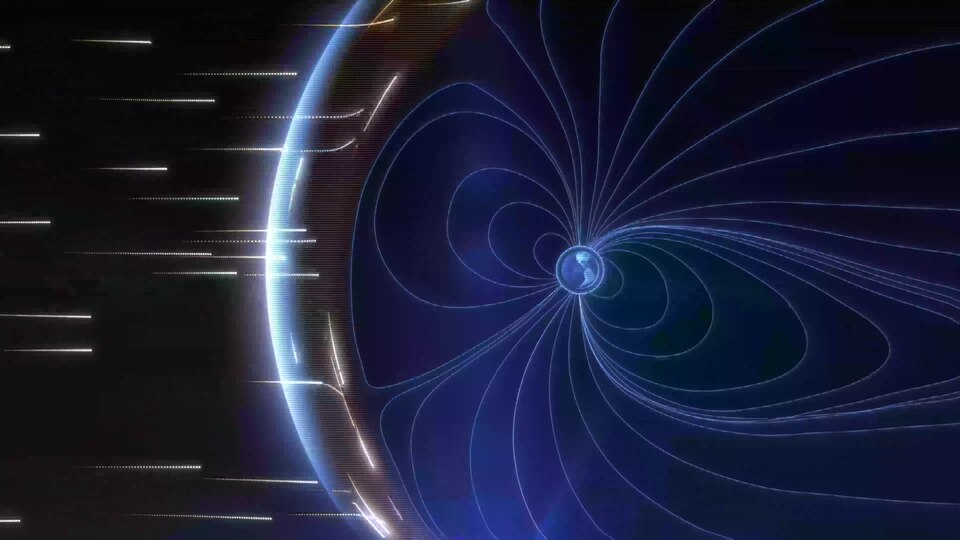
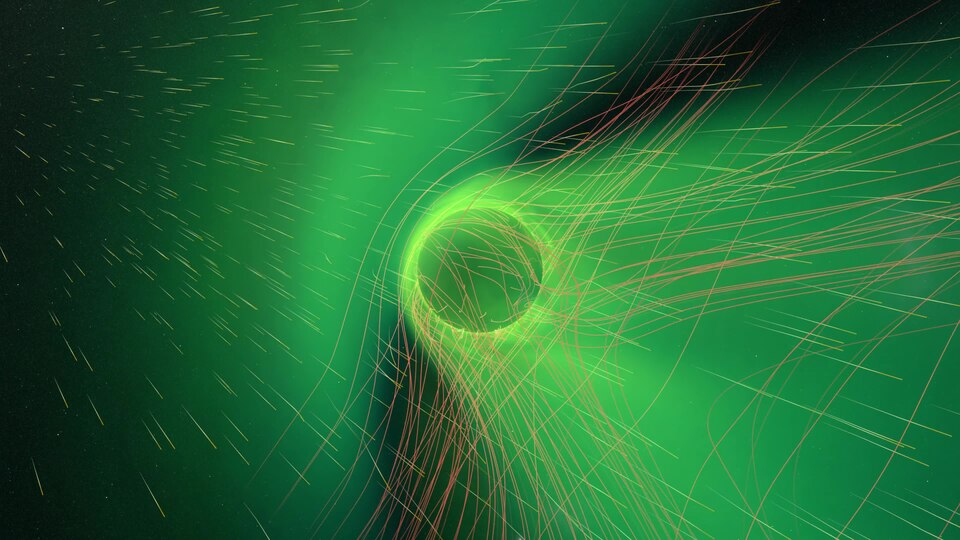
According to the paper, which was written by Dr. Nithin Sivadas and co-authors at NASA's Goddard Space Flight Center, the apparent "saturation" of Earth's response to powerful solar storms is likely not real. Instead, it may be a mathematical illusion produced by measurement errors and a phenomenon called regression to the mean.
As Phys.org reported, scientists have long tracked the interaction between the solar wind and Earth's magnetosphere using something called the Polar Cap Index, or PCI. For moderate solar activity, there is a clear and consistent relationship: stronger solar wind produces a stronger electrical response in Earth's upper atmosphere. But for larger storms, that relationship appeared to break down. Earth's response seemed to cap out, or "saturate," at a level lower than expected. Researchers never fully understood why.
The new paper points to where measurements are taken as the core of the problem. Nearly all solar wind data comes from satellites positioned at the L1 Lagrange point, a location roughly 1.5 million kilometers, or about 930,000 miles, closer to the Sun than Earth is. That distance introduces significant uncertainty into the measurements.
The solar wind can change substantially over that 1.5 million kilometer gap. The timing of how long it takes wind to travel from L1 to Earth also varies. And during extreme events, shock fronts create what the researchers call heteroskedastic noise, meaning random measurement errors that grow larger the more powerful the storm is.
That combination produces a situation in which scientists are pairing extreme solar wind readings taken far upstream at L1 with more moderate geomagnetic responses measured at Earth. Because the true solar wind arriving at Earth is statistically more likely to be less extreme than the L1 reading, the data curve bends in a way that makes Earth's magnetosphere look as though it is absorbing and capping the storm's energy. The authors call this a nonlinear regression bias.
To test the idea, the research team applied a technique called regression calibration to the dataset to correct for some of that bias. After doing so, the linear relationship between solar wind strength and Earth's geomagnetic response extended further than it had before, without the apparent saturation effect flattening the curve.
If the paper's argument holds up, the implications are significant. A magnetosphere that does not saturate means Earth could be exposed to geomagnetic effects far stronger than current models predict during extreme solar events. Infrastructure that depends on stable electromagnetic conditions, including power grids, GPS systems, and satellite communications, could face greater risk than previously estimated during major solar storms.
The research adds to a broader conversation in space weather science about whether historical data gives an accurate picture of what the most extreme solar events look like and how Earth actually responds to them.