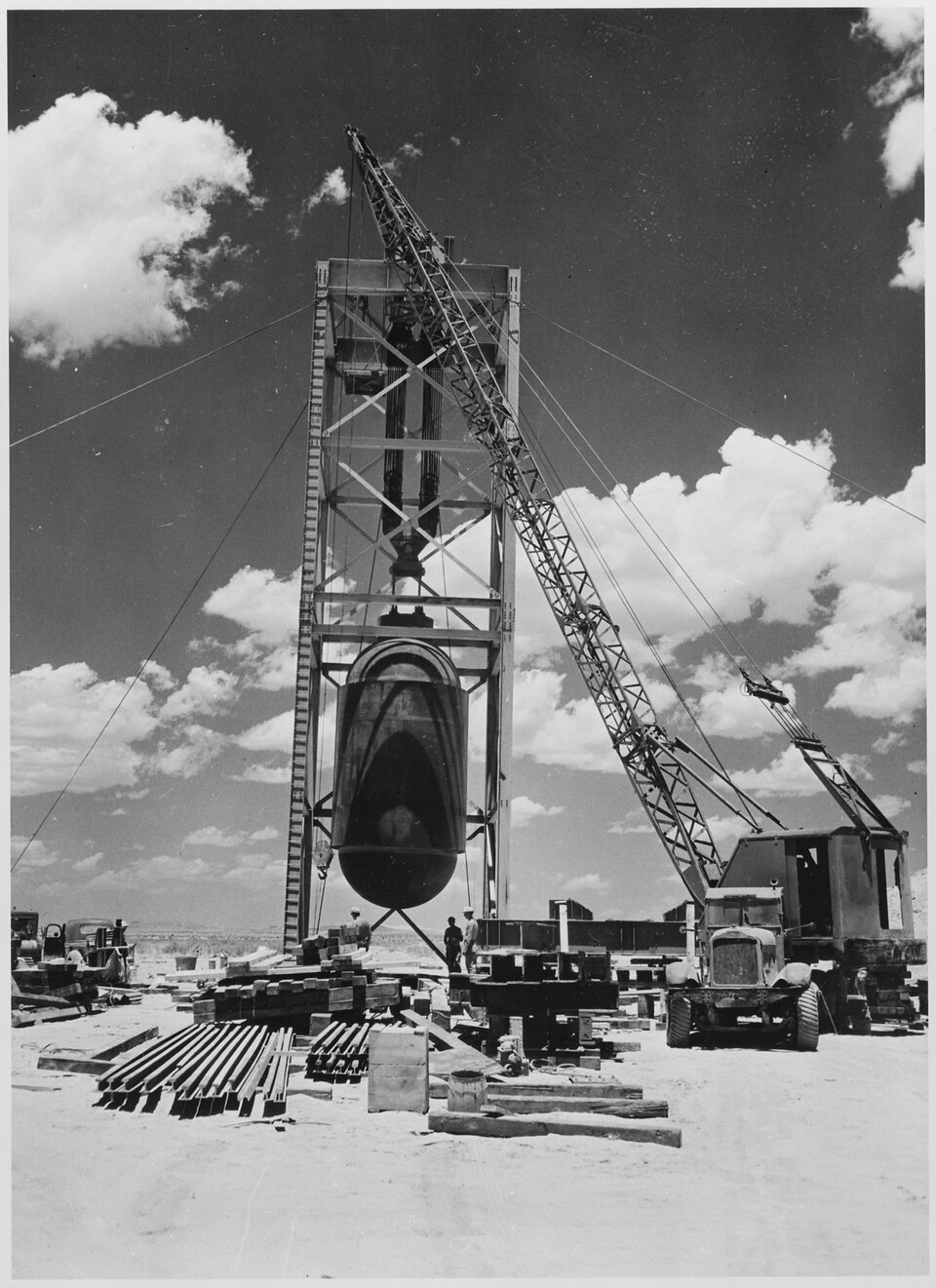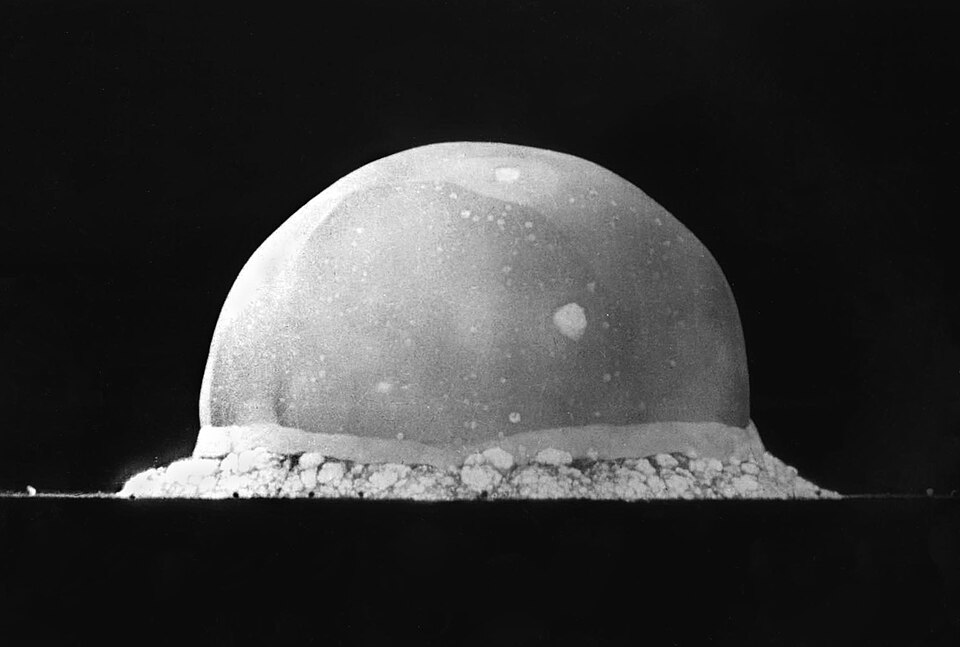
In the early hours of July 16, 1945, in a remote stretch of New Mexico desert, a fireball rose into the sky and a massive shock wave rolled outward toward a watching crowd of scientists, engineers, and military personnel. The Trinity nuclear test had succeeded. What is less well known is the extraordinary scientific operation built around that single detonation.
A new book published by the University of Chicago Press in 2026 examines that operation in detail. Titled Trinity: An Illustrated History of the World's First Atomic Test, it was written by Emily Seyl, a science writer and editor at Los Alamos National Laboratory's National Security Research Center. Seyl draws on never-before-seen photography from the laboratory's legacy collections to document the physical and mental effort that went into making the test work.
As Live Science reported, one of the book's central focuses is measurement. The most basic question the test needed to answer was whether the device, called the Gadget, would produce a nuclear explosion at all. But the scientists involved treated the detonation as far more than a pass-fail event. It was also a large and complicated science experiment, and researchers piled additional experiments on top of it wherever they could.
The book describes how, after two years of racing through basic nuclear research to build a workable device, the scientists "yielded to temptation and conceived experiment after experiment" as Trinity approached. That impulse created logistical problems for Kenneth Bainbridge, the director of the Trinity nuclear test, who had to manage a selection committee starting in December 1944 to evaluate what had become an unwieldy number of proposed measurements.
Spread across the desert around the test site were arrays of electronic and mechanical instruments, some using first-of-their-kind technologies built specifically for the occasion by leading researchers. Their job was to capture data from an event no one had ever measured before.
The fundamental challenge the scientists faced was that they did not know how large the explosion would be. As one scientist described it, "The greatest unknown was how much energy would be released by the weapon." That uncertainty shaped everything about how they designed their instruments and positioned their observers.
The book uses the measurement challenge at Trinity as a way into the broader human story of the Manhattan Project, an aspect that Seyl argues is often overlooked in standard accounts that focus on the physics and the politics. The photographers and instrument operators, the engineers who built the test structures, and the committee members who argued over which experiments to include are all part of the history the book is trying to recover.
Trinity: An Illustrated History of the World's First Atomic Test is available now from the University of Chicago Press.