

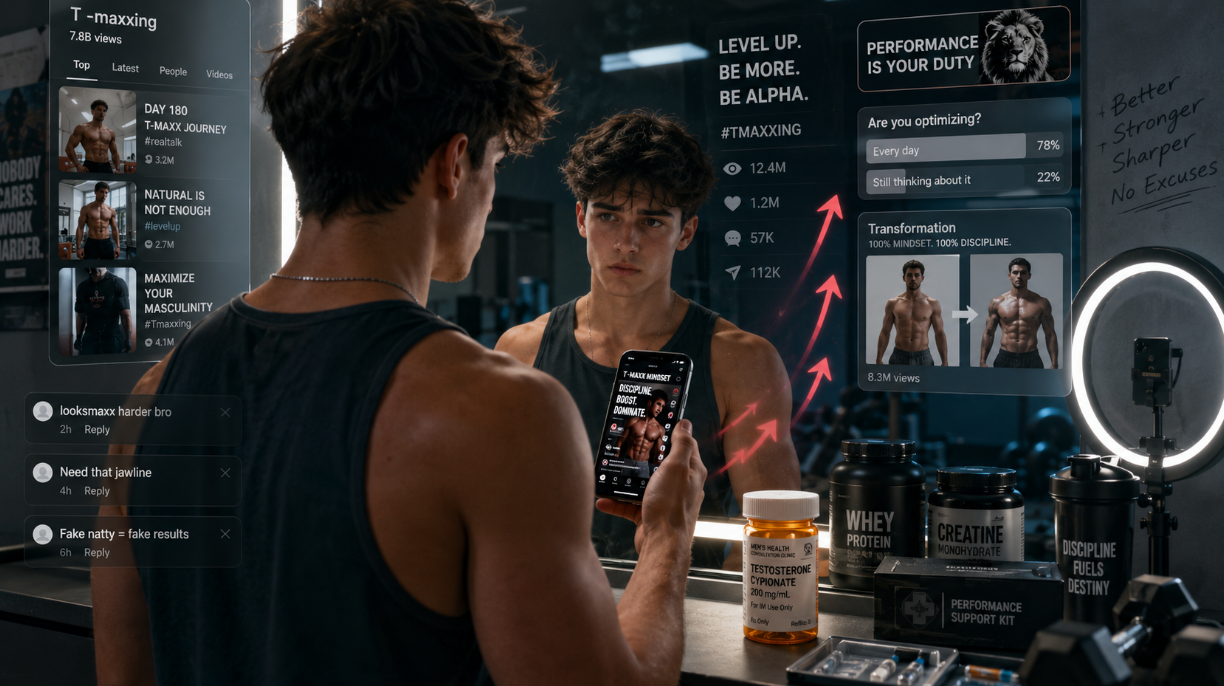
A viral social media trend called "T-maxxing" is pushing young men toward testosterone therapy as a tool for building muscle, boosting confidence, and improving appearance, even when no medical diagnosis supports it. Influencers and online communities are promoting higher testosterone levels as a shortcut to becoming leaner, stronger, and more masculine. Some telehealth clinics are advertising testosterone directly in social media feeds, not as a treatment for a diagnosed condition, but as a body optimization tool.
According to Healthline, the trend falls under a broader category of viral male appearance movements that include looksmaxxing and spermmaxxing. Together, these trends frame physical optimization as something men can and should pursue aggressively, with hormones increasingly offered as part of that toolkit.
Philip Werthman, a board-certified urologist and director of the Center for Male Reproductive Medicine and Vasectomy Reversal in Los Angeles, described a shift he has observed in his practice. "Increasingly, I see younger men who have normal testosterone levels but have been led to believe that raising their testosterone further will make them leaner, stronger, more energetic, more sexually active or more confident," he said. "That represents a fundamental change from treating a medical deficiency to using a prescription hormone as a performance or appearance enhancer," he told Healthline.
Testosterone therapy, known as TRT, does have legitimate medical uses. It can provide real benefits for adolescents and young adults whose bodies do not produce enough of the hormone on their own. But doctors draw a clear line between that use and taking exogenous testosterone to optimize a body that is already functioning normally. Using unprescribed hormones can suppress the body's natural testosterone production, which is a significant medical risk that many social media promoters do not address.
The appeal of the trend goes beyond the physical. Experts say young men navigating body image problems, low self-esteem, or uncertainty about how they are supposed to look and feel are especially vulnerable to this kind of messaging. Social media algorithms can make the problem worse by repeatedly serving users more extreme fitness and hormone-related content, creating a feedback loop that intensifies insecurity rather than resolving it.
Rachel Goldman, a licensed psychologist in private practice in New York City and author of "When Life Happens," explained the psychological pull of the trend. "There's something really appealing about these trends because they give people a sense of control," she said. "For someone who is already feeling insecure or uncertain, maybe lacking psychological body image or confidence, that can feel much easier than sitting with the underlying discomfort," she told Healthline.
T-maxxing promises a wide range of benefits from TRT, including improved mood, increased energy, and psychological boosts to confidence and body image. Medical experts do not dispute that testosterone plays a role in muscle development, sexual function, and other characteristics that matter to young men. The dispute is over whether artificially raising levels that are already normal produces those benefits, and whether the risks involved are being made clear to the young men pursuing the trend.