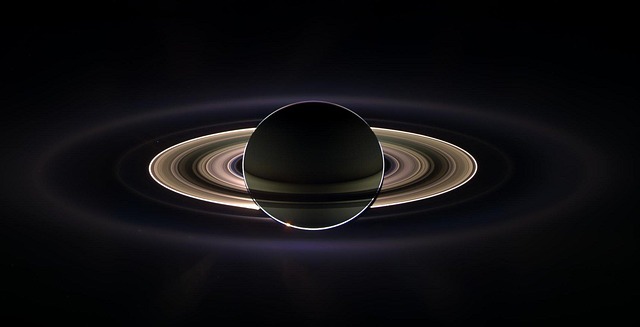
Ten thousand tiny satellites launched toward Saturn. That is one of 18 futuristic spaceflight ideas NASA has agreed to fund, according to a report by Space.com. The concepts range from radical propulsion systems to swarms of miniature spacecraft, and NASA selected all of them through a program designed to push the boundaries of what future missions might look like.
The femtosat concept centers on the idea of a mothership traveling to Saturn and then releasing thousands of extremely small satellites across the planet's system. The sheer number of spacecraft would allow scientists to gather data across a wide area simultaneously, something no single probe could accomplish on its own. Femtosats are among the smallest satellite class ever considered for deep space deployment.
NASA's funding program for advanced concepts, known as the NASA Innovative Advanced Concepts program, or NIAC, provides early-stage support to researchers and engineers who propose ideas that may seem far-fetched today but could become the foundation for real missions decades from now. The program does not guarantee any of these ideas will fly. Instead, it gives researchers time and resources to study whether the concepts are physically possible and potentially practical.
The other 17 funded ideas cover a broad range of spaceflight challenges. The program has historically supported concepts that later influenced actual NASA missions, even when the original proposals seemed unlikely at first review.
The Saturn femtosat swarm drew particular attention because of the scale of the idea. Coordinating 10,000 spacecraft in the outer solar system would require advances in miniaturized electronics, communication systems, and autonomous operation. Each femtosat would need to function independently while still contributing to a larger data collection effort.
Scientists have long sought better ways to study Saturn and its moons, rings, and magnetosphere. The Cassini spacecraft, which orbited Saturn from 2004 until its mission ended in 2017, returned enormous amounts of data from a single probe. A swarm approach would offer coverage that one spacecraft cannot provide, potentially catching events that happen across multiple locations at the same time.
The 18 selected concepts represent the kinds of long-range thinking NASA says it wants to encourage. Some ideas funded by NIAC in past years took more than a decade to move from early concept to something resembling a realistic mission plan. Others never advanced beyond the study phase. The program treats that outcome as acceptable, since the goal is to explore possibilities rather than guarantee deliverables.
Researchers behind the femtosat proposal will now move into a study phase, working out whether the engineering challenges involved in building, launching, and operating that many spacecraft in deep space can be overcome with technologies that either exist today or are likely to exist within the coming decades.