

A mathematician working for artificial intelligence company Anthropic announced Friday, November 20, 2026, that he believes its Claude AI model helped him solve the Riemann hypothesis. The mathematical problem has resisted attempts at a solution since 1859 and is considered one of the most important unanswered questions in mathematics. However, the proposed proof has not yet received independent verification, and a separate claim from another mathematician has added uncertainty to the announcement.
Levent Alpöge, a mathematician on Anthropic's technical staff, published a four-page statement describing his work with Claude. He said the collaboration produced a proof of the Riemann hypothesis and a broader result known as the generalized Riemann hypothesis. He also released computer code intended to demonstrate that the mathematical arguments are logically correct.
The announcement drew immediate attention from researchers and technology companies because the Riemann hypothesis is among the seven Millennium Prize Problems. Each carries a $1 million prize for an accepted solution, although any proposed proof must undergo extensive examination before receiving official recognition.
Anthropic Researcher Describes Claude's Role
Alpöge explained that his collaboration with Claude involved combining several mathematical approaches to investigate the problem. He provided guidance and identified promising directions, while the AI system reportedly developed ideas that moved the research forward.
In his public statement, Alpöge wrote that he believed he had discovered a proof while working with Claude. He described being surprised by the model's mathematical progress, particularly during the final stages of the work.
According to Nature, the claim represents one of the most ambitious attempts to use artificial intelligence to resolve a longstanding mathematical question. The development follows several months of research showing that increasingly capable AI systems can contribute to advanced mathematical reasoning.
Alpöge acknowledged that the proposed argument is exceptionally complicated and contains mathematics he has not yet fully mastered. He said he plans to prepare a detailed written explanation so other mathematicians can understand and evaluate the work.
The researcher published a collection of files containing a purported formal proof written in Lean, a programming language designed to help computers verify mathematical reasoning. Such systems can check whether a sequence of mathematical statements follows logically from its stated assumptions.
However, a formal verification claim does not automatically establish that the correct mathematical problem has been solved. Independent researchers must also confirm that the underlying definitions, assumptions, and final statements match the Riemann hypothesis.
What Is the Riemann Hypothesis?
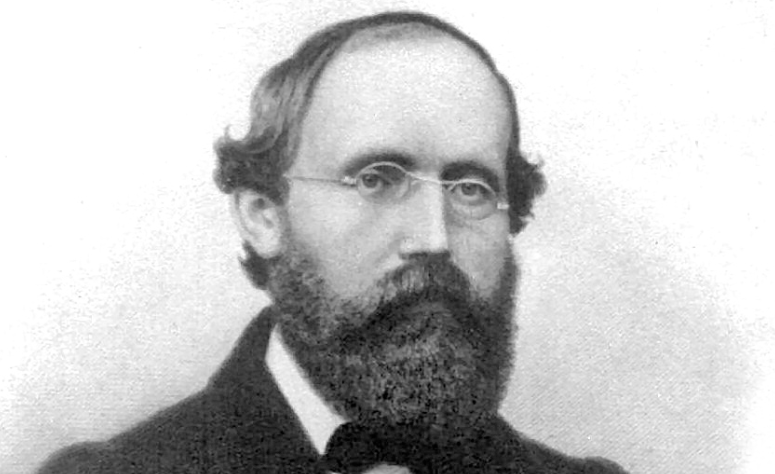
The Riemann hypothesis was proposed by German mathematician Bernhard Riemann in 1859. It concerns the distribution of prime numbers, which are whole numbers greater than one that can be divided evenly only by themselves and one.
Prime numbers appear throughout mathematics and are important to modern computing, including several methods used in digital security. Although mathematicians understand many properties of prime numbers, their distribution among larger numbers remains difficult to predict precisely.
Riemann discovered an important connection between prime numbers and a mathematical expression known as the Riemann zeta function. This function has certain values called zeros, where its result equals zero.
The hypothesis states that every nontrivial zero of the zeta function has a real part equal to one-half. Mathematicians have checked enormous numbers of these zeros, but testing individual examples cannot establish that the statement holds for every possible case.
A correct proof would provide a much stronger understanding of how prime numbers are distributed. It could also settle numerous other mathematical statements that depend on the hypothesis being true.
Another Mathematician Presents a Separate Proof
The excitement surrounding Alpöge's announcement intensified when news emerged of another proposed solution developed without artificial intelligence.
Stanford University mathematician Alessandro Masullo had been working on an independent proof of the generalized Riemann hypothesis. Ravi Vakil, a Stanford professor and president of the American Mathematical Society, publicly discussed Masullo's work on Friday.
Vakil explained that mathematician Brian Conrad had been reviewing the proposed argument for several months and providing detailed feedback. Masullo's research was still being revised when Alpöge announced his AI-assisted result.
Scientific American reported that the competing development introduced a debate over the timing of the discoveries and their mathematical significance. Masullo's work had been underway for years, although it had not previously received broad public attention.
The two approaches differ substantially. Alpöge's announcement emphasizes computer-assisted formal verification, while Masullo's proposed proof was developed through conventional mathematical research without AI assistance.
Neither claim has been established as a correct solution. The existence of two proposals does not demonstrate that either proof is valid, and questions about priority remain separate from the mathematical review process.
Why Independent Verification Matters
Mathematical proofs require more than promising results or successful computer calculations. Researchers must demonstrate that every essential step follows from accepted mathematical principles and that no hidden assumptions undermine the argument.
This process can become especially difficult when a proposed proof involves unfamiliar techniques or thousands of pages of reasoning. Even experienced mathematicians may need considerable time to understand and independently check complex arguments.
AFP reported that Brian Conrey, a specialist in the Riemann hypothesis, considered the announcement potentially extraordinary but had not yet examined a full manuscript. His response reflected both the excitement surrounding the claim and the need for careful scrutiny.
The computer-generated nature of Alpöge's proposed proof presents additional challenges. Although Lean is designed to check logical arguments, outside experts still need to examine the mathematical statements encoded in the software.
Reviewers must determine whether the code proves the intended theorem rather than a related or incorrectly defined statement. They must also inspect the formal environment and confirm that the result does not depend on unproved assumptions.
Until those checks are completed, the mathematical community cannot treat the Riemann hypothesis as definitively solved.
AI Has Already Contributed to Mathematical Research
Alpöge's announcement follows other research projects in which AI systems have assisted mathematicians with difficult problems.
In August 2026, Anthropic reported that Claude had improved an important mathematical result concerning the zeros of the Riemann zeta function. The research strengthened an existing finding about how many zeros lie on the critical line associated with the hypothesis.
That work did not establish the full Riemann hypothesis, but it demonstrated how artificial intelligence could help researchers extend existing mathematical techniques.
Alpöge has also collaborated with mathematician Tristan Buckmaster on research involving complex fluid equations. Their earlier work formed part of a broader period of AI-assisted mathematical discoveries and disputes over verification and research credit.
The latest claim differs in its potential scope. A validated proof would resolve a problem that has influenced mathematical research for more than a century and a half.
At the same time, the competing human-developed argument suggests that traditional mathematical research remains central to the field. Both approaches depend on independent scrutiny before they can be accepted.
A Million-Dollar Prize Requires More Than a Claim
The Clay Mathematics Institute established its Millennium Prize Problems in 2000 to recognize seven exceptionally difficult questions. The Riemann hypothesis was included because of its importance to number theory and its influence across mathematics.
Under the institute's rules, a proposed solution must appear in a qualifying publication and receive general acceptance within the international mathematical community. At least two years must also pass after publication before the institute considers awarding the prize.
The organization continues to classify the Riemann hypothesis as unsolved. No official announcement has established that either Alpöge's or Masullo's proposed argument satisfies the requirements for recognition.
A successful proof could change mathematical research by resolving questions that currently depend on unverified assumptions. It could also provide new techniques for studying related problems.
For now, mathematicians face the demanding task of examining both proposed solutions. Alpöge intends to develop a readable explanation of his AI-assisted argument, while Masullo's independent manuscript continues to undergo revision.
The next important development will come from researchers who can determine whether either argument provides a complete, rigorous proof of the 167-year-old Riemann hypothesis.