Around 4.6 billion years ago, the solar system was nothing more than a giant ball of gas and dust. Scientists have long believed gravity alone drove the dramatic transformation that followed, flattening that cloud into a spinning disk and eventually forming the sun and planets. A new study from MIT says magnetism also played a role, and it has ancient evidence to prove it.
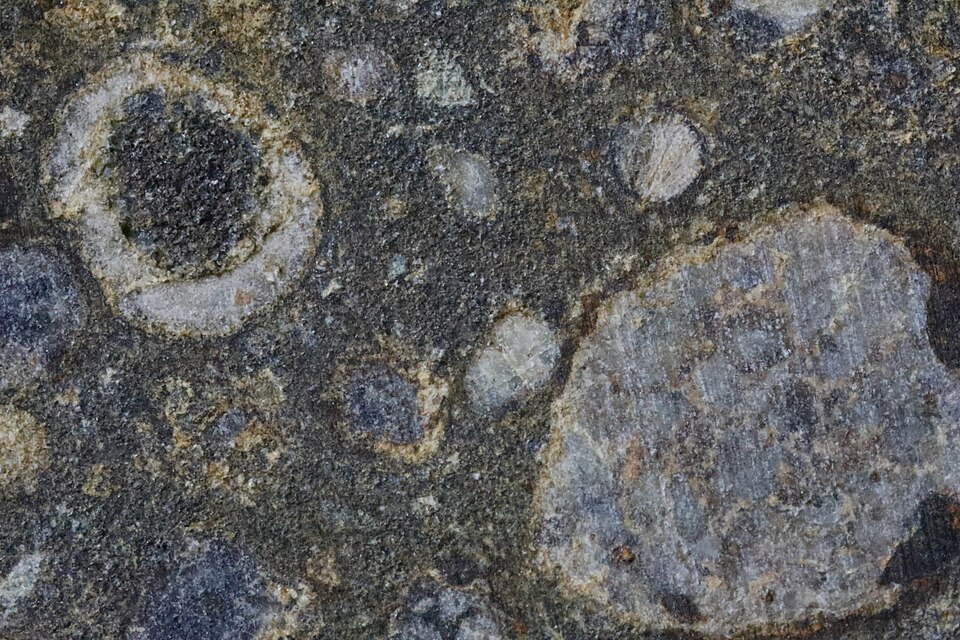
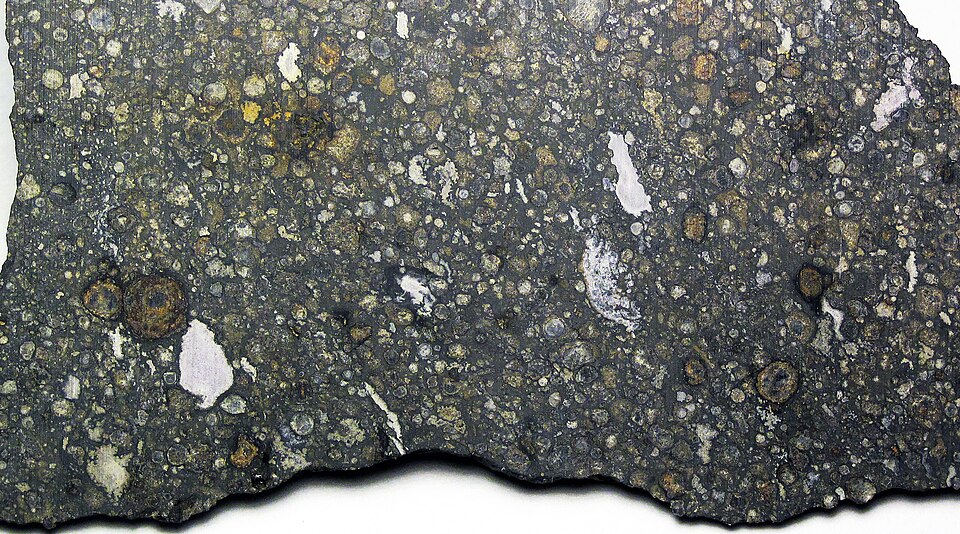
The researchers analyzed microscopic grains embedded in a meteorite found in Antarctica in 2008. Those grains, called calcium-aluminum-rich inclusions, or CAIs, formed during the solar system's first 200,000 years. That makes them the oldest known solar system material ever studied. The findings appeared this week in the Proceedings of the National Academy of Sciences, according to a report by Phys.org.
The team discovered records of ancient magnetism locked inside those grains. Tiny magnetic minerals, as they condensed out of the early disk, preserved the strength of the surrounding magnetic field. That preserved intensity, called remanent magnetization, survived billions of years and made it to Earth for researchers to measure.
The researchers estimate the nebular magnetic field was stronger than Earth's magnetic field today. They say it likely pulled together primordial matter to help form the early sun, working alongside gravity during one of the solar system's most critical periods.
"This transition, from a spherical cloud to a protoplanetary disk, is one of the most significant events in all of solar system history," said Benjamin Weiss, the Robert R. Shrock Professor of Earth and Planetary Sciences at MIT. "It has long been theorized that gravity caused this, but our measurements show magnetism likely played a role."
The team's explanation for how that field formed centers on plasma. As the collapsing cloud of gas and dust compressed, it could have whipped up electrically charged particles. Those charges spinning through the developing disk would have generated and sustained a magnetic field. Material condensing in that environment would then have locked the field's strength into place, preserving it for scientists to find billions of years later.
This is not the first time Weiss and his colleagues have found evidence of early solar system magnetism. The team had previously identified a magnetic field as early as 2 million years into the solar system's formation. The new findings push that timeline back significantly, placing magnetic activity in the first 200,000 years.
The study's MIT co-authors include first author Cauê Borlina, Elias Mansbach, and Nilanjan Chatterjee. Researchers from Tsinghua University, Cambridge University, Caltech, and the University of California at Los Angeles also contributed to the work.