Archaeologists in Poland were nearly finished with an excavation when a circular shape in the soil stopped them. Beneath it was the grave of a man from the Middle Neolithic period, buried with two decapitated human heads, a necklace made from 42 mammal teeth, a battle ax, amber beads, and a flint blade. The site, near Wrocław in southwest Poland, has turned out to be one of the most unusual Stone Age burials found in the region.
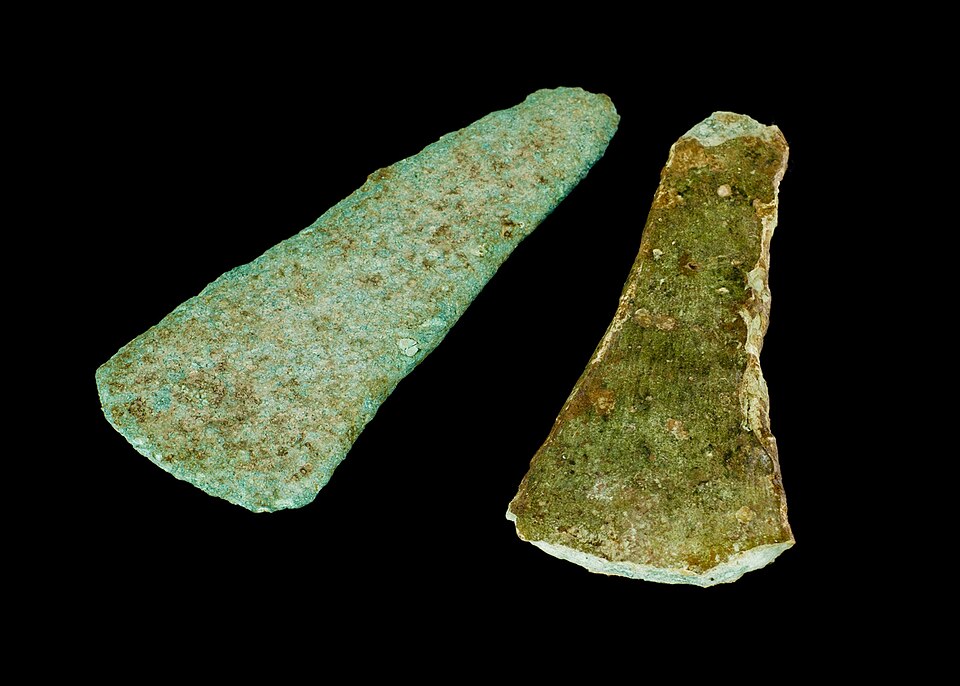
According to Live Science, the discovery was made at what was otherwise a Roman-period cemetery. The man's burial predates that cemetery by roughly three millennia. The key clue to the burial's age was the battle ax, which was made from serpentinite, a greenish metamorphic rock. The style of that ax placed the burial at around 2900 B.C., during the Middle Neolithic, also known as the New Stone Age.
"We were practically packing up, and then we discovered a circular shape in the ground and began digging," said Paweł Dąbrowski, a biological anthropologist at Wrocław Medical University, in a translated statement issued September 2. "We found fairly well-preserved animal teeth arranged in a necklace."
The necklace drew particular attention from researchers. The 42 teeth were arranged with precision, and each one had a hole drilled through its root. "The arrangement of the 42 teeth was precise," Dąbrowski said, "and upon further inspection, it turned out that all of them had holes drilled through their roots. They must have formed a kind of necklace."
The teeth came from large mammals. Dąbrowski identified them in a September 4 translated statement as incisors and canines from wolves, deer, bears, and possibly humans.
The two human skulls found alongside the man are thought to have been deposited as gifts or funeral offerings. Researchers believe the heads may have been decapitated before burial, but further analysis is still needed to confirm that. The overall picture of the burial suggests the man held a significant position in his community.
"It's possible we've discovered the grave of a warrior or hunter, but because of this necklace, we can assume it was someone important, for example, the leader of a family clan," Dąbrowski said.
Researchers noted that a similar burial had previously been found nearby. That grave also contained axes, flint tools, and amber beads, and included the bones of a calf, suggesting an animal sacrifice at the site. To date, these are the only two burials of this type found in the area. Both burials are being studied together, with further skeletal analysis planned to determine more about the individuals and the circumstances of their deaths.