

A U.S. military operation destroyed five Iranian oil tankers on Tuesday in response to attacks on American warships in the region. The strikes occurred near the Strait of Hormuz, a key shipping lane through which about one-fifth of the world's oil passes. Iranian state media reported that its forces targeted American military bases in Jordan, an ally hosting U.S. troops. Jordan's military said it intercepted 18 ballistic missiles launched toward its territory and two others fell in uninhabited areas. No casualties were reported from the missile attacks, according to Jordan’s defense forces. The U.S. Central Command said it had no information to share about the situation in Jordan.
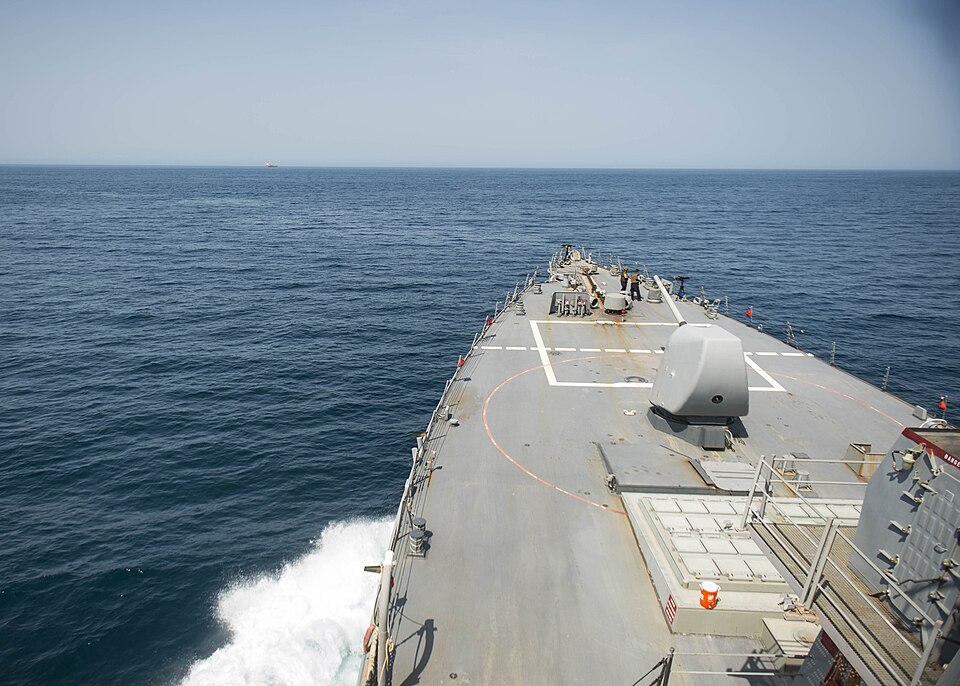
The military operation followed two missile attacks on a U.S. Navy warship by Iran's Revolutionary Guards over the past two days, according to NPR. The U.S. Navy warship successfully avoided the missiles and continued its patrol in regional waters. No American personnel were harmed during the incident, according to a statement from U.S. Central Command. The tankers destroyed on Tuesday included Kivik, Charminar, Horizon 1, Riesco, and Derya, located in the Gulf of Oman and near Kharg Island. Crews aboard the vessels were told to abandon ship before the attacks took place.
Iranian state television reported that one of its tankers was struck near the coast of Yekbeni in Jask. A second tanker was also attacked near waters off Jask, according to Iranian state television. Separately, Iranian state media said another tanker was hit in the anchorage area near Kharg Island.
The U.S. military said it had conducted these attacks in coordination with allied forces and in response to Iranian aggression. The strikes are part of a broader strategy by the Trump administration to pressure Iran economically and militarily. In addition to the tanker attacks, the U.S. imposed new sanctions on Iran’s aviation industry, targeting more than two dozen airlines and cargo providers. The conflict over the Strait of Hormuz has disrupted global oil supplies, causing rising energy prices that are affecting political dynamics in the U.S. ahead of the November elections.
Iran also announced plans to establish a new exclusion zone near the Strait of Hormuz for vessels passing through the area. U.S. officials have made it clear that they will not allow Iranian attacks to go unanswered. Secretary of State Marco Rubio said the U.S. would continue striking Iranian tankers if necessary, warning of further retaliation.
An Iran expert from Israel’s Institute for National Security Studies warned that such actions risk further escalation and global economic damage. The U.S. military blockade of Iranian ports has already reduced the country's ability to export oil, while American forces continue to assist a limited number of ships transiting the Strait of Hormuz. Iran seeks to control passage through the strait, which was previously considered an international waterway.
Before the war began in February, about one-fifth of global oil passed through the Strait of Hormuz, but traffic has since dropped significantly, according to a report from news.google.com. The ongoing conflict has drawn more regional actors into the dispute, including Saudi Arabia and Yemen’s Houthi rebels. Saudi authorities reported injuries to 73 people after Houthi attacks on oil sites earlier in the week. South Korean officials said they had sent a fact-finding team to assess the situation in Hormuz but had not yet decided whether to deploy troops.
Global oil prices have risen sharply due to the conflict, with Brent crude reaching $100 per barrel at one point, The Independent reported.