

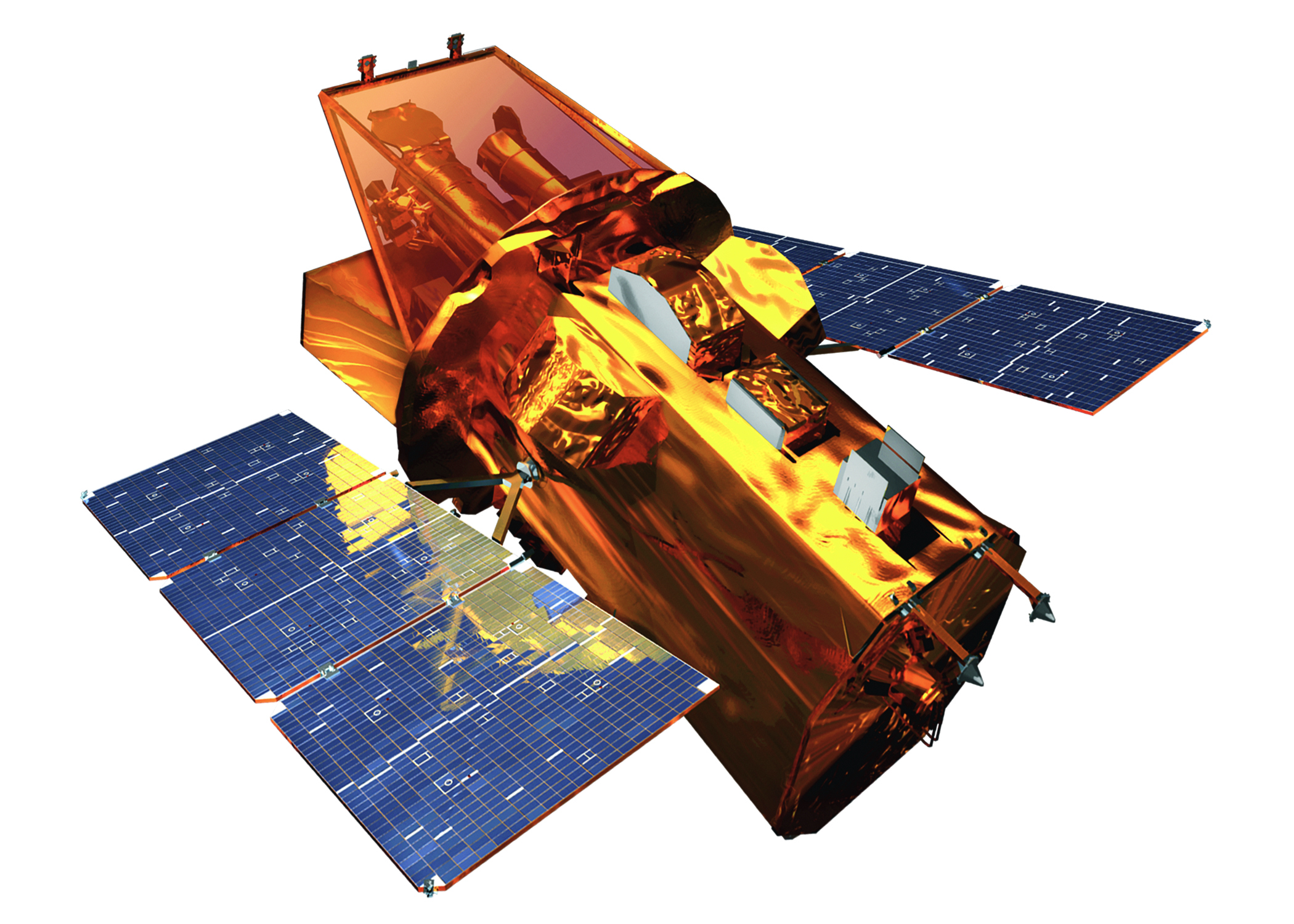
NASA’s Neil Gehrels Swift Observatory has resumed science observations after months operating in a limited mode while awaiting a rescue mission that ultimately did not succeed. The observatory, which has been studying powerful gamma-ray bursts since 2004, switched on its Ultraviolet/Optical Telescope and X-ray Telescope on August 26. Katalyst Space’s LINK spacecraft captured images of Swift from a distance of about nine miles during this period, showing its position in orbit.
In February, NASA had placed Swift into a reduced power mode to extend its operational life as it prepared for a potential rescue by a private company, according to popsci.com. The agency had enlisted Katalyst Space to build a spacecraft named Link to capture Swift and move it into a higher orbit. Despite the failed rescue attempt, Swift is now returning to normal operations and is expected to reach an altitude of about 300 kilometers within one to two months.
Eventually, Swift will fall back into Earth’s atmosphere between October and December of this year. Meanwhile, scientists using NASA's Chandra X-ray Observatory have identified a new class of objects in distant galaxies that behave differently than previously known celestial bodies, according to a report from science.nasa.gov. These mysterious sources emit unusually low-energy X-rays but also produce intense ultraviolet radiation, a combination that has never been seen before.
The discovery was published in the journal Nature Astronomy and involved researchers from the University of Alabama, including Mustafa Muhibullah, who led the study. Scientists found a total of 84 such objects across six galaxies using data from Chandra’s public archive, including spiral galaxies like M31 and M101. These sources were identified by their low-energy X-ray emissions that disappeared in higher-energy images, indicating a unique emission pattern.
The objects are thought to involve binary systems with black holes, neutron stars, or white dwarfs pulling material from companion stars. The team believes these systems may help solve two long-standing problems in astrophysics, including the mystery of how gas between stars gets stripped of electrons. They also may help astronomers locate the stars that eventually become Type Ia supernovae, which are important for measuring cosmic expansion.
These objects were difficult to detect because their low-energy X-rays are hard for telescopes to pick up, and the high-energy ultraviolet radiation is absorbed by gas between stars. By combing through Chandra’s archive, scientists were able to identify these hidden sources and fill a gap in their understanding of galactic processes. In another development, astronomers using the ALMA radio telescope have observed two massive stars forming a binary system in the process of coming together, Space.com reported.
This system, named IRAS 07299−1651, is located about 5,300 light-years away and shows stars that are still forming. The team was surprised to find that the stars did not follow expected orbital paths, instead showing chaotic movement during their formation. Instead of orbiting in neat circles, the stars were found to have misaligned disks and a complex gravitational dance.
The researchers traced back the orbital paths and determined that this close encounter likely occurred around 60 years ago. This finding shows that the early lives of stars can be more chaotic than previously believed, with unexpected gravitational interactions shaping their development. It remains uncertain whether these stars will stay bound together or eventually drift apart, but the method used for this study may help track other young binary systems.
The research was published in the journal Nature Astronomy and involved scientists from institutions in China, Spain, and the United States.