

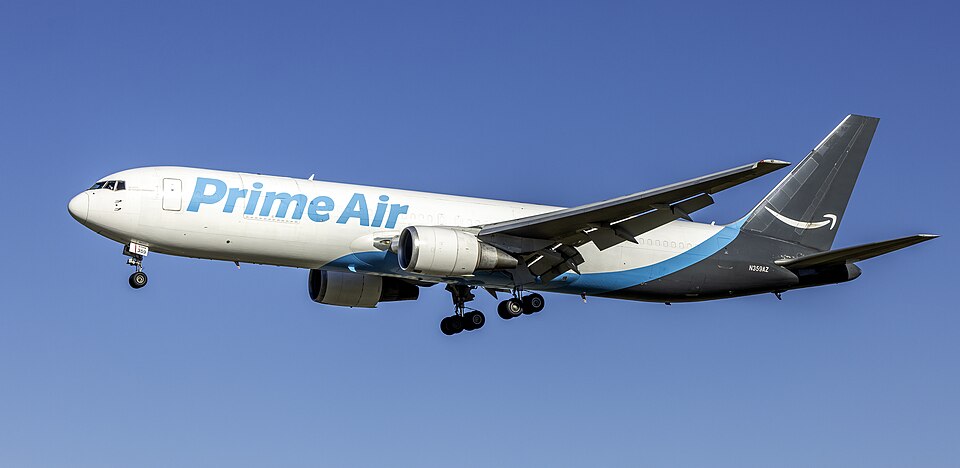
An Amazon cargo jet crashed at Miami International Airport on Sunday afternoon, overshooting the runway and killing five people. The crash happened on Sept. 6 at about 1:53 p.m. as 21 Air Flight 7598 arrived from San Juan, Puerto Rico. The plane came in fast and slid roughly 1,300 feet past the end of the runway before hitting a van carrying workers. The van was carrying seven people from a plane cleaning company, five of whom died in the crash. The five victims were Rolando Aleman Leon, Yoel Rodriguez Naranjo, Julio C. Pineda, Carlos Acosta Fajardo and Javierkys Reyes Quevedo.
Five others were injured, including two who remained in critical condition, according to NPR. The two critically injured people were the other two workers who had been riding in the van. The two pilots survived the crash and were interviewed by investigators, according to a report from news.google.com. Both pilots had been treated and released from the hospital before those interviews. Flight data showed that the plane touched down awkwardly and briefly attempted to take off again.
The plane then continued sliding across a public road before hitting a compact SUV and catching fire. According to the National Transportation Safety Board, one pilot repeatedly warned the other that the aircraft was going too fast. The second pilot did not give a consistent verbal response to the warnings.
The cockpit voice recordings were reviewed by investigators, but the full transcript will not be released until later in the investigation. The NTSB said the recorder information released so far is preliminary and may change as the investigation continues. Former FAA official Mike O'Donnell said the crew had time to slow down or abort the landing. He noted that the pilots could have extended spoilers, cut throttles, or lowered landing gear to reduce speed.
They could also have performed a go-around, which is standard procedure when landing conditions are unsafe. The plane was unsteady as it approached the ground, and flight data showed it briefly disengaged brakes. The pilots pushed the throttles up as if trying to take off again, but abandoned that plan just four seconds later. NTSB data showed the nose and right main landing gear touched down at a ground speed of 158 knots. The left main landing gear touched down 11 seconds later at 134 knots. Investigators found no indication in the recorded data that the speed brakes or thrust reversers were deployed.
Automated warnings from the aircraft indicated issues with the rate of descent and terrain proximity. These warnings suggest the aircraft was not properly configured for landing. The right and nose landing gear touched down first, well down the runway, reducing the distance available to stop.
Strong winds from incoming storms may have created a tailwind that pushed the plane forward. Tracking data showed the plane was nearly halfway down the runway when it first touched ground. Investigators have not determined whether weather was a cause of the crash. The Boeing 767 involved in the crash was originally built for passenger service and had been flying internationally for over two decades.
It was converted to cargo use in 2015 and was operated by 21 Air, a North Carolina-based carrier. The final flight was operated by 21 Air, which has been flying packages for Amazon since 2024. The aircraft had already flown from Cincinnati to Miami and then from Miami to San Juan earlier that day. It was carrying 32,222 pounds of cargo, much of it contact lenses, according to the NTSB. Investigators are reviewing the jet’s ownership history, weather conditions, maintenance records and operations by 21 Air. Amazon and 21 Air have said they are cooperating with the investigation.
Investigators are also examining airport safety factors. Runway 30 did not have an Engineered Materials Arresting System, known as EMAS, at its end. EMAS uses crushable material to slow aircraft that overrun a runway. The NTSB is looking at whether such a system could have made a difference in this crash.
Safety experts questioned the teamwork between the two pilots during the approach. Former pilot Steve Arroyo said there was a lack of coordination and leadership in the cockpit. He questioned how the pilot at the controls could have ignored warnings about speed.
Experts believe the pilots should have aborted the landing while still in the air. A wrongful-death lawsuit has been filed on behalf of Yoel Rodriguez Naranjo’s family against Amazon, 21 Air and the pilots. This crash comes just months after another cargo plane accident, when a UPS jet crashed in Louisville. That crash killed all three pilots and 12 people on the ground.
Twenty-three more were injured in that incident.