

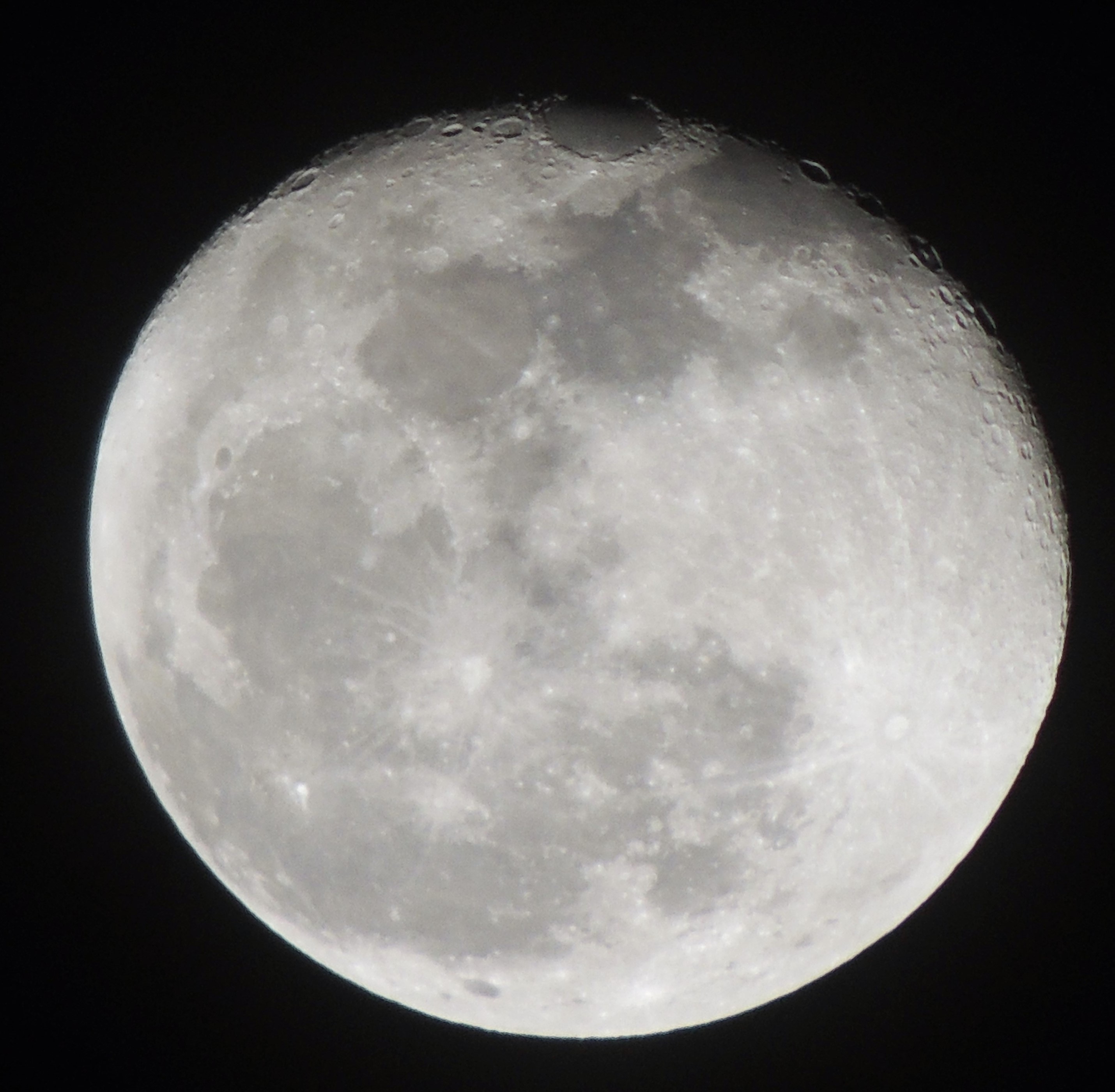
Observers across the Northern Hemisphere will have a chance to view a special celestial event this November. The full moon in November will be a supermoon, appearing larger and brighter than usual. This November's full moon is also known as the Beaver Moon. The name comes from the time of year when beavers were active in preparing for winter. The supermoon will reach its full phase on November 24.
NASA says the moon will officially reach its full phase at 14:54 UTC on Nov. 24. A supermoon occurs when a full moon happens while the moon is near the closest part of its orbit around Earth. NASA says a full moon at its closest can appear up to 14% larger and 30% brighter than the faintest full moon of the year. The difference can still be difficult to notice with the naked eye. Another supermoon will follow on Dec. 24.
In addition to the supermoon, skywatchers can look forward to a planetary parade in mid-November, according to the BBC. Mercury, Venus, Mars and Jupiter will be gathered in the morning sky during the middle of the month. Jupiter and Venus will be visible in the night sky during this time, according to a report from the BBC. These planets will be easy to spot with the naked eye.
Venus will be especially bright as it climbs higher into the morning sky during November. Mars and Jupiter will also appear close together during the middle of the month. Mercury will be more difficult to see because it will remain lower near the horizon. Mercury reaches its greatest western elongation on Nov. 20. A location with an open eastern horizon will give viewers a better chance to see the planets before sunrise.
The term “planet parade” is informal. It describes several planets appearing in the same general part of the sky from Earth. The planets are not actually lined up close together in space.
Earth will pass through trails of dust and debris left by Halley's comet twice each year. Those crossings produce the Eta Aquariids in May and the Orionids in October. NASA says both showers are created by material shed by Halley during its trips through the inner solar system. Halley itself will not return to the inner solar system until 2061.
The meteors in the November shower appear to come from the constellation Leo. The November meteor shower is called the Leonids. The Leonids are produced by debris from Comet 55P/Tempel-Tuttle rather than Halley’s Comet. The shower will be active from Nov. 6 through Nov. 30. NASA lists the peak night as Nov. 16-17.
The 2026 Leonids are not expected to produce a large number of meteors. NASA estimates fewer than three meteors per hour under dark skies. However, Leonid meteors travel at about 43.5 miles per second. That makes them some of the fastest meteors seen from Earth. They can also produce bright fireballs and long streaks.
The Leonids have a history of producing much more dramatic displays. Comet Tempel-Tuttle takes about 33 years to orbit the sun. At times the Leonids can become a meteor storm with hundreds or even thousands of meteors per hour. NASA says the last Leonid meteor storm occurred in 2002. The famous 1966 storm produced thousands of meteors per minute for a short period.
For the 2026 shower, NASA recommends beginning observations around midnight. Viewers should move away from streetlights and other sources of artificial light. It can take about 30 minutes for the eyes to adjust to darkness. Meteors can appear anywhere in the sky, so there is no need to stare directly at Leo.
The appearance of the supermoon and planetary alignment will make for a memorable month. People are encouraged to check local weather forecasts before heading out. The BBC Weather app or website can help plan the best viewing times.
There will be another astronomical event immediately after the supermoon. Uranus reaches opposition on Nov. 25. At opposition, the planet is on the opposite side of Earth from the sun and is well placed for viewing during the night. Unlike Venus and Jupiter, Uranus is best viewed with binoculars or a telescope.
For the supermoon, viewers do not need any special equipment. Looking toward the eastern horizon around moonrise on the evening of Nov. 24 should provide one of the best views. The moon can look especially large when it is close to buildings, trees or mountains near the horizon.
These celestial events offer a chance to enjoy the beauty of space from Earth.