

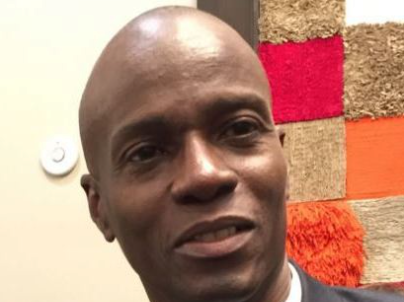
Former Haitian President Jovenel Moïse was killed on July 7, 2021, at his private home by a group that included military-trained Colombian mercenaries. U.S. prosecutors say the plot involved people in Haiti, Colombia and the United States who planned and financed efforts to remove Moïse from power.
The investigation took a major step forward in September 2026 when 18 suspects were transferred from Haiti to the United States to face federal charges. The group included 17 former Colombian soldiers and Joseph Badio, a former Haitian Justice Ministry official. They were flown to South Florida aboard a U.S. military aircraft.
U.S. Attorney Jason Reding Quiñones said the transfer marked another phase in the investigation. He said federal authorities would continue following evidence involving people who financed, facilitated, supported or committed crimes connected to the assassination.
A number of individuals have already been convicted in connection with the crime, including Arcángel Pretel Ortiz, Antonio Intriago, Walter Veintemilla, and James Solages. A federal jury in Miami convicted the four men in May 2026 on charges that included conspiracy to kill or kidnap a person outside the United States and providing material support that resulted in death. All four face possible life sentences.
Ortiz and Intriago were connected with a group known as CTU, which stood for Counter Terrorist Unit Federal Academy and Counter Terrorist Unit Security. Veintemilla was linked to Worldwide Capital Lending Group. Prosecutors said CTU recruited about 20 Colombian nationals with military training to take part in the operation.
Prosecutors said the original plan involved removing Moïse from office and replacing him with Haitian-American Christian Emmanuel Sanon. The conspirators later shifted their support to a former Haitian Supreme Court judge after determining that Sanon lacked the constitutional qualifications and political support to become president.
Sanon is awaiting trial in the United States. He was transferred from Haitian custody to U.S. custody in 2023. Prosecutors have alleged that he was involved in the early stages of the plan and had political ambitions in Haiti.
The case has moved much more quickly in the United States than in Haiti. Haitian judicial proceedings have faced repeated delays because of political instability, gang violence and threats against judges. Five years after the assassination, trials for many defendants had still not begun in Haiti.
The September transfer removed many of the remaining high-profile suspects from Haiti. U.S. authorities say 30 people have now been indicted in connection with the assassination.
The former first lady, Martine Moïse, was wounded during her husband's killing. In 2024, a judge in Haiti charged Martine Moïse with complicity and criminal association. Former Prime Minister Claude Joseph and former Haitian police chief Léon Charles were also among those charged in Haiti. Martine Moïse and Joseph have denied wrongdoing.
The Haitian case remains separate from the federal prosecution in Miami. The U.S. investigation has focused heavily on the planning and financing that took place in South Florida.
According to Justice Department evidence presented at trial, the conspirators discussed several plans to kidnap or remove Moïse before eventually deciding to kill him. Prosecutors said weapons, tactical equipment and money were supplied to the group that carried out the attack.
Veintemilla helped finance the plot through a $175,000 loan arrangement. Intriago handled logistics and equipment. Pretel Ortiz helped direct tactical planning. Solages served as a liaison in Haiti and accompanied the Colombian group during the attack, according to federal prosecutors.
The investigation continues as U.S. and Haitian authorities try to determine the full network behind the assassination. Federal prosecutors have said the latest extraditions will not end their efforts to identify others who may have financed or supported the plot.