

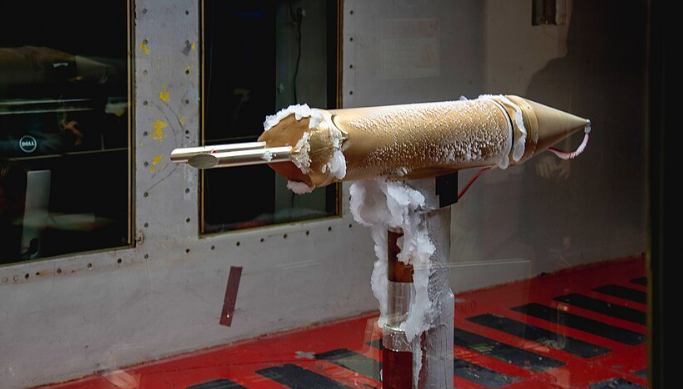
NASA is conducting experiments to better understand how aircraft behave when flying through clouds containing unusually large drops of water that remain liquid even at very cold temperatures. These droplets, known as supercooled large droplets, can be up to two thousand microns in diameter and are much larger than the typical droplets aircraft encounter during normal flights.
Supercooled water exists in clouds when temperatures drop below freezing point but the droplets do not freeze until they come into contact with tiny particles like dust or ice crystals.
Aircraft are built to handle typical icing conditions where droplets range from two to one hundred microns in size, which is much smaller than the supercooled large drops. The aviation industry uses engineering tools to design aircraft that can withstand normal icing situations, but there are concerns about how well these tools account for the behavior of large supercooled droplets. NASA says the larger droplets can strike or splash farther back on an aircraft than smaller droplets.
That creates a particular concern because some of the affected areas can be behind conventional ice protection systems. Ice that forms farther back on a wing can disrupt airflow and affect aircraft handling or performance. NASA has studied this type of icing for decades as part of its aviation safety research.
To address this, NASA researchers are testing new probes designed to measure the size of these large droplets in controlled environments. These probes can detect droplets larger than forty-five microns and provide real-time data on their sizes during testing, according to NASA. The tests were conducted in NASA Glenn Research Center's Icing Research Tunnel in Cleveland from June 8 through June 11.
The results from these new probes will be compared with droplet-size images that require more extensive analysis after the tests are completed. Data from these tests will also be combined with measurements taken by a different probe that captures droplets smaller than forty-five microns. NASA says the combined measurements should allow researchers to determine the full range of droplet sizes produced in the tunnel.
This testing campaign is part of the Subsonic Flight Demonstrator project, which falls under NASA’s Research and Technology Mission Directorate. The full analysis of the test data is ongoing, and NASA plans to share findings with the broader aerospace community once the project is complete.
The goal of this research is to improve safety for aircraft flying through conditions where supercooled large droplets can cause dangerous icing.
These experiments are important because the current tools used by engineers may not fully represent how large droplets behave in real-world flight conditions. By improving understanding of this phenomenon, NASA hopes to help aircraft designers and pilots better prepare for these challenging weather conditions. NASA also plans to use the testing to improve the equipment that creates and measures experimental clouds inside the tunnel.
The testing is part of a larger effort to advance aviation safety technologies and support future flight operations in all kinds of weather. NASA’s work on this issue is an important step toward reducing the risks that supercooled large droplets pose to aircraft in flight. The results of these experiments will help engineers build better tools for predicting how aircraft respond under such conditions.