

Democrats captured control of several state governments in the November 3, 2026, midterm elections, winning legislative majorities and governorships across important battlegrounds. The party secured new opportunities to set policy in Wisconsin, Michigan, Minnesota, Pennsylvania and Nevada while breaking Republican legislative control in other states.
The gains extended beyond the contests for Congress, where Democrats also won both chambers. State-level victories will affect decisions on school funding, taxes, abortion rights, voting procedures and congressional district boundaries in the years ahead.
Five States Move to Unified Democratic Control
A state government “trifecta” occurs when one party controls the governor’s office and both legislative chambers. The Associated Press reported that Democrats gained trifectas in at least five previously divided states: Wisconsin, Michigan, Minnesota, Pennsylvania and Nevada.
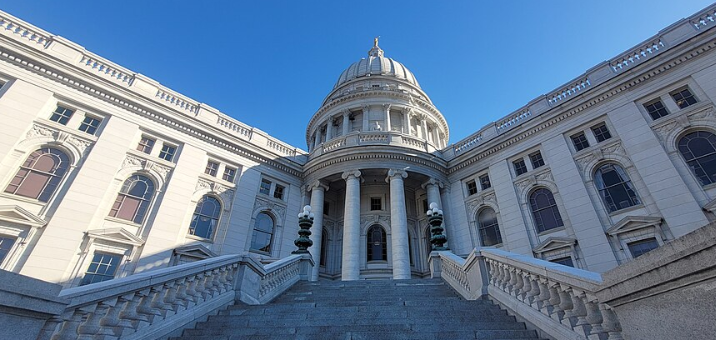
In Wisconsin, Democrats flipped the Assembly and Senate after years of Republican legislative majorities. Democrat David Crowley defeated Republican Tom Tiffany in the governor’s race and will succeed outgoing Democratic Governor Tony Evers, giving the party unified state government for the first time since 2010.
Crowley, who served as Milwaukee County executive, will become Wisconsin’s first Black governor. The state’s legislative contests followed years of disputes over political maps, including a Wisconsin Supreme Court decision that led to new legislative boundaries for the 2024 elections.
The new majorities could allow Democrats to revisit education spending, labor policy, health care and voting rules. They also create expectations for the incoming lawmakers to deliver results on rising household costs, a major concern during the campaign.
Minnesota and Michigan Shift After Divided Government
Minnesota Democrats regained full legislative control while retaining the governorship. Amy Klobuchar won the governor’s race to succeed Tim Walz, who served as governor rather than as a U.S. senator during the election campaign.
The Minnesota House had previously been evenly divided, with Democrats holding the Senate. Winning a House majority gives the incoming governor a legislative path for proposals, although disagreements within the party and budget limitations could still affect what passes.
In Michigan, Democrats flipped the state House after Republicans entered the election with a 58-52 advantage. They also retained control of the Senate, while Democrat Jocelyn Benson won the race to succeed term-limited Governor Gretchen Whitmer.
Together, those results return unified Democratic control to Michigan’s state government. Legislative leaders will have to negotiate priorities involving manufacturing jobs, infrastructure, schools and economic development, including disputes about the costs and benefits of large technology projects.
Pennsylvania and Nevada Complete the Five-State Shift
Pennsylvania Governor Josh Shapiro won reelection, while Democrats took control of the state Senate and expanded their majority in the House. The new alignment ends divided control in Harrisburg and could change negotiations over spending, the minimum wage and reproductive rights.
Shapiro told supporters that he wanted to pursue a $15 minimum wage, infrastructure investments and constitutional protections for abortion rights. Those proposals will still require legislative approval and may face disagreement over details and funding.
In Nevada, Democrat Aaron Ford defeated Republican Governor Joe Lombardo. Democrats retained their existing legislative majorities, making the governor’s race the decisive change needed for unified party control.
The five trifectas did not arise in exactly the same way. Wisconsin and Michigan involved legislative flips, Pennsylvania required a Senate change, Minnesota moved beyond a divided House, and Nevada changed its governor while its legislature remained Democratic.
New Hampshire, Arizona and North Carolina Record Major Gains
New Hampshire Democrats also won control of both legislative chambers, according to the Democratic Legislative Campaign Committee. Republican Governor Kelly Ayotte nevertheless won reelection, leaving the state with divided government rather than a Democratic trifecta.
The original projections of 253 Democratic seats in the New Hampshire House and a 12-12 Senate should not be presented as final results. Vote counting and independent race calls continued after election night, while the party committee reported that Democrats had secured control of both chambers.
Arizona Democrats also claimed control of the House and Senate, according to the party’s legislative campaign organization. With Democratic Governor Katie Hobbs retaining office, the result would give the state its first Democratic trifecta since the 1960s, subject to final certification of close legislative races.
In North Carolina, Democrats captured the state House while Republicans remained competitive for control of the Senate. The House result interrupts years of Republican dominance of the chamber without itself establishing unified Democratic control of state government.
Texas and Other Republican-Led States See Changes
Texas delivered another major legislative shift. Democrats won control of the state House for the first time since the 2002 election, while Republicans retained the Senate.
Democrat Gina Hinojosa also defeated incumbent Republican Governor Greg Abbott, becoming Texas’s first Latina governor. The combination ended Republican control of all three parts of the state government, although the Republican Senate means Texas will not have a Democratic trifecta.
Elsewhere, Democrats broke Republican legislative supermajorities in states including Florida, Indiana, Iowa, Ohio and South Carolina. Losing a supermajority matters because it can reduce a party’s ability to override vetoes or use special legislative procedures without opposition votes.
The Democratic Legislative Campaign Committee said its candidates had flipped at least 12 legislative chambers and more than 450 Republican-held seats nationwide. Those figures are the organization’s preliminary tally, not a final certified count from state election offices.
State Elections Could Shape National Politics
The shifts give Democrats more influence over state laws and election administration ahead of the next presidential election. Depending on each state’s laws, legislative control can also affect redistricting decisions and the rules governing voting access.
Republicans still hold important offices and legislative majorities in several states, including the New Hampshire governorship and the Texas Senate. The Republican State Leadership Committee acknowledged a difficult political environment, while elected Republicans will continue to shape policy where they retain authority.
The Associated Press reported that Democrats are set to control at least 28 governorships in 2027. That change adds another dimension to the party’s congressional gains, although governors and state lawmakers operate under different powers and constraints from members of Congress.
Some close legislative races still require final tabulation and certification. As the incoming governors and lawmakers prepare for their 2027 sessions, attention will turn from election-night gains to budgets, legislative negotiations and the practical effects of the new statehouse majorities.