

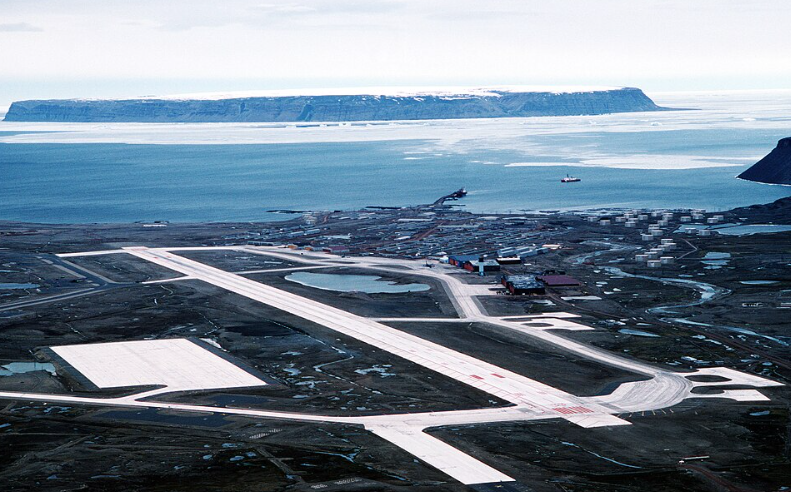
The deal gives the United States access to two additional military sites in Greenland while allowing it to expand operations at the existing Pituffik Space Base. It also gives Washington a stronger role in blocking certain foreign investments in sensitive areas including resource extraction.
Trump signed the agreement at the United Nations in New York with Danish Prime Minister Mette Frederiksen and Greenland Prime Minister Jens-Frederik Nielsen.
The agreement does not make Greenland part of the United States. Greenland remains a semi-autonomous territory within the Kingdom of Denmark. The deal also recognizes Greenland's right to self-determination.
Trump said the agreement gives the United States permanent control over security matters in Greenland. Danish and Greenlandic officials have described it differently. They say sovereignty remains unchanged and that the agreement is focused on NATO security.
The agreement creates U.S. defense areas at Narsarsuaq in southern Greenland and Mestersvig in eastern Greenland.
Narsarsuaq was once home to an American Cold War installation known as Bluie West One. Mestersvig is currently used by Denmark's Sirius Dog Sled Patrol. The United States currently operates Pituffik Space Base in northwestern Greenland.
Trump told the U.N. that the United States would begin developing what he called two major military bases. The agreement also allows Washington and Greenland to approve additional defense areas in the future.
U.S. aircraft and ships will receive broad access to Greenland and its territorial waters under the agreement. The deal also allows the United States to expand missile defense operations including parts of Trump's planned Golden Dome system.
The agreement has no set expiration date. It would remain in effect even if Greenland eventually becomes independent as long as Greenland remains part of NATO and accepts the obligations contained in the agreement.
The military provisions are only one part of the growing U.S. interest in Greenland.
The island contains large deposits of rare earth elements and other critical minerals. A geological review found that Greenland has 25 of the 34 materials classified as critical by the European Commission.
Rare earth elements are used in military equipment, electric vehicles, wind turbines, electronics and powerful permanent magnets.
Greenland also has graphite and known lithium resources. Both materials are important to the battery industry.
The Geological Survey of Denmark and Greenland has identified significant lithium resources associated with several major mineral deposits in southern Greenland. It has also identified large deposits of rare earth elements in the same region.
However, the new security agreement does not simply give the United States ownership of Greenland's rare earths or lithium.
Mining rights remain subject to Greenland's laws and licensing process. The Greenland government controls the development of its mineral resources.
What the agreement does provide is greater U.S. influence over who may invest in sensitive industries.
Reuters reported that the agreement restricts investments by governments and investors outside NATO, NATO partner countries and the European Union when they seek control or significant influence over sensitive sectors. Resource extraction is specifically included.
That provision could make it much harder for Chinese companies to gain control over major Greenland mining projects.
China currently dominates much of the global processing industry for rare earth elements. Reducing dependence on China has become an important goal for the United States and several European governments.
Investors have already treated the Greenland agreement as potentially important for U.S. mineral supplies.
Critical Metals Corp. controls the Tanbreez project in southern Greenland. Tanbreez is considered one of the world's largest known heavy rare earth deposits. The company has been moving toward commercial production and has signed a 15-year agreement to supply rare earth concentrate to U.S.-based REalloys.
Still, Greenland is unlikely to become a major source of rare earths overnight.
Mining there is difficult and expensive. Much of the island lacks roads, ports, electrical infrastructure and a large workforce. Severe Arctic weather also makes construction and transportation difficult.
Environmental rules present another obstacle.
Greenland banned uranium mining in 2021. That decision has affected the development of the Kuannersuit project because its rare earth deposits are associated with uranium. Greenland rejected a request this year to renew an exploration license for that project.
Graphite may offer another route into the battery market.
GreenRoc is developing the Amitsoq graphite project in southern Greenland. The company plans to process some of the graphite into material used in lithium-ion battery anodes. Greenland granted the project a 30-year exploitation license in December 2025.
That distinction is important. Greenland may contain lithium but graphite currently appears to be one of its more advanced battery-material projects.
The new agreement could make U.S. investment in Greenland mining more attractive. It could also give Western companies greater confidence that Chinese or Russian investors will not gain control of strategically important projects.
But the United States does not automatically receive Greenland's minerals under the agreement.
American companies would still need licenses, financing, infrastructure and approval from Greenland before extracting them.
The military expansion is much more certain.
The United States once maintained 17 installations and more than 10,000 personnel in Greenland during the Cold War. That presence later fell to about 200 service members at Pituffik. The new agreement marks the largest expansion of U.S. military infrastructure there in decades.
Greenland's location gives the island unusual strategic importance. It sits between North America and Europe and lies along routes that missiles or military aircraft could use between Russia and the United States.
The Arctic is also becoming more important as melting sea ice opens shipping routes and makes access to natural resources easier.
Trump had previously called for the United States to acquire Greenland. The new agreement stops short of that goal but gives Washington much of the expanded military access it had sought.
For the United States the next question may be economic.
The security deal does not hand Washington Greenland's rare earths or lithium. But it could help create a political and security environment where American and allied companies gain a larger role in developing them.
That could become increasingly important as the United States looks for alternatives to China for the minerals used in weapons, electronics and batteries.